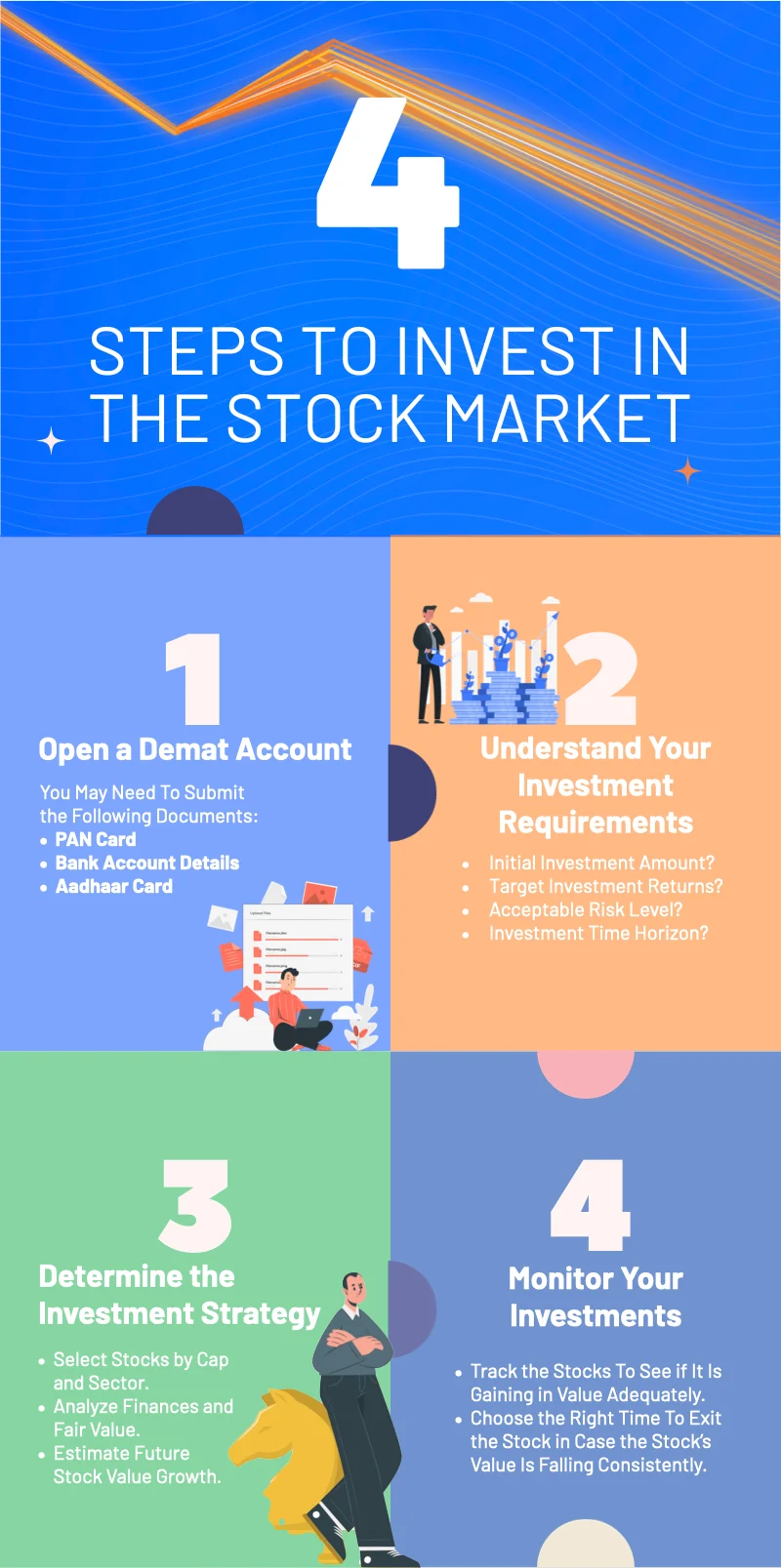
Investing in the stock market is one of the most effective ways to build long term wealth. While it may appear complex at first, understanding the fundamentals can make the process much simpler and more manageable. The stock market allows individuals to participate in the growth of businesses and benefit from economic expansion over time. With the right knowledge, patience, and discipline, investing can become a powerful tool for financial independence.
In India, stock market activities are regulated by the Securities and Exchange Board of India, ensuring transparency and investor protection. Major stock exchanges such as the National Stock Exchange and the Bombay Stock Exchange facilitate buying and selling of shares. Understanding how this system works is the first step toward becoming a confident investor.
What Is the Stock Market
The stock market is a platform where shares of publicly listed companies are bought and sold. When you purchase a stock, you are buying partial ownership in that company. As the company grows and earns profits, the value of your investment may increase. Some companies also distribute part of their profits as dividends to shareholders.
Stock prices fluctuate daily based on demand and supply, company performance, economic conditions, global events, and investor sentiment. While short term movements can be volatile, long term investing often rewards patience.
Why Should You Invest in the Stock Market
Investing in the stock market offers several benefits. First, it has the potential to provide higher returns compared to traditional savings accounts or fixed deposits. Second, it helps beat inflation over time. Third, it allows you to build wealth gradually through the power of compounding.
Compounding means earning returns not only on your initial investment but also on the returns generated over time. The earlier you start investing, the greater the benefit of compounding.
Step 1: Set Clear Financial Goals
Before investing, define your financial goals. Ask yourself why you are investing. Are you saving for retirement, buying a house, funding education, or building long term wealth
Your goals will determine your investment horizon and risk tolerance. For example, long term goals allow you to take more calculated risks compared to short term goals.
Clear goals provide direction and prevent emotional decision making.
Step 2: Understand Your Risk Appetite
Every investor has a different risk tolerance. Some people are comfortable with market fluctuations, while others prefer stability.
Generally, younger investors with long time horizons can take moderate to higher risks. Those nearing retirement may prefer safer investments.
Understanding your comfort level with risk helps you choose suitable stocks and investment strategies.
Step 3: Open a Demat and Trading Account
To invest in the stock market in India, you need two accounts:
Demat account to hold shares in electronic form
Trading account to buy and sell shares
These accounts can be opened with registered brokers or financial institutions. Many brokers now offer online account opening processes, making it convenient for beginners.
Ensure that the broker is registered with the Securities and Exchange Board of India for safety and compliance.
Step 4: Learn the Basics of Stock Selection
Choosing the right stocks is crucial. There are two primary methods investors use:
Fundamental analysis involves studying a company’s financial health, revenue growth, profit margins, debt levels, and future prospects.
Technical analysis focuses on price patterns, charts, and market trends.
Beginners are generally encouraged to focus on strong companies with consistent performance, good management, and stable earnings.
Avoid investing based solely on rumors or tips from unverified sources.
Step 5: Diversify Your Portfolio
Diversification means spreading your investments across different sectors and companies. This reduces risk because poor performance in one stock may be balanced by better performance in another.
Instead of investing all your money in a single company, consider allocating funds across industries such as banking, technology, healthcare, and consumer goods.
Diversification helps create a balanced portfolio.
Step 6: Start Small and Invest Regularly
You do not need a large amount of money to start investing. Begin with an amount you are comfortable with. Regular investing, even in small amounts, builds discipline and reduces the impact of market volatility.
Systematic investment strategies, such as investing monthly, help average out purchase costs over time.
Consistency is more important than timing the market perfectly.
Types of Investment Options in the Stock Market
There are different ways to invest in the stock market.
Equity shares represent direct ownership in a company.
Mutual funds pool money from multiple investors to invest in diversified portfolios managed by professionals.
Exchange traded funds track indices and trade like stocks.
Index funds replicate the performance of a specific market index.
Beginners who lack time for research may consider mutual funds or index funds as a starting point.
Understanding Market Indices
Market indices represent the overall performance of a group of stocks. In India, popular indices include Nifty 50 and Sensex.
The Nifty 50 tracks the top 50 companies listed on the National Stock Exchange.
The Sensex tracks 30 major companies listed on the Bombay Stock Exchange.
Indices provide insight into overall market trends and economic sentiment.
Importance of Long Term Investing
Stock markets can be unpredictable in the short term. Prices may rise and fall due to global news, economic policies, or company specific events.
However, historically, markets have shown growth over long periods. Long term investing allows you to ride out temporary downturns and benefit from overall economic expansion.
Patience and discipline are essential qualities of successful investors.
Common Mistakes to Avoid
Many beginners make similar mistakes when starting their investment journey.
Investing without research
Following market hype blindly
Panic selling during market corrections
Investing borrowed money
Ignoring diversification
Avoiding these mistakes increases your chances of long term success.
Role of Research and Continuous Learning
The stock market is dynamic. Companies evolve, regulations change, and global events impact markets.
Successful investors continuously educate themselves by reading financial news, company reports, and market analysis.
Understanding economic indicators, interest rates, and inflation trends helps make informed decisions.
Knowledge reduces uncertainty and builds confidence.
Taxation on Stock Market Investments
Profits earned from stock investments are subject to taxation. In India, short term capital gains and long term capital gains are taxed differently.
Understanding tax implications helps you plan better and optimize returns.
Consulting a financial advisor can provide clarity on tax planning strategies.
Building Emotional Discipline
Investing is not just about numbers; it also involves managing emotions. Fear and greed often drive poor decisions.
During market declines, panic selling may lock in losses. During rallies, excessive optimism may lead to overinvestment.
Staying calm and following a well defined strategy helps maintain stability.
When to Seek Professional Advice
If you are unsure about stock selection or portfolio management, consider consulting a certified financial advisor.
Professional guidance can help align investments with your goals and risk tolerance.
However, even with expert advice, basic financial knowledge remains essential.
Final Thoughts
Investing in the stock market is a journey that requires patience, planning, and continuous learning. It offers significant opportunities for wealth creation when approached with discipline and realistic expectations.
Start by setting clear goals, understanding your risk tolerance, and opening the necessary accounts. Focus on diversification, long term growth, and consistent investing. Avoid emotional decisions and stay informed about market developments.
The stock market is not a shortcut to instant riches, but with time and careful strategy, it can become a powerful tool for financial growth. By taking small, steady steps today, you lay the foundation for a stronger and more secure financial future.